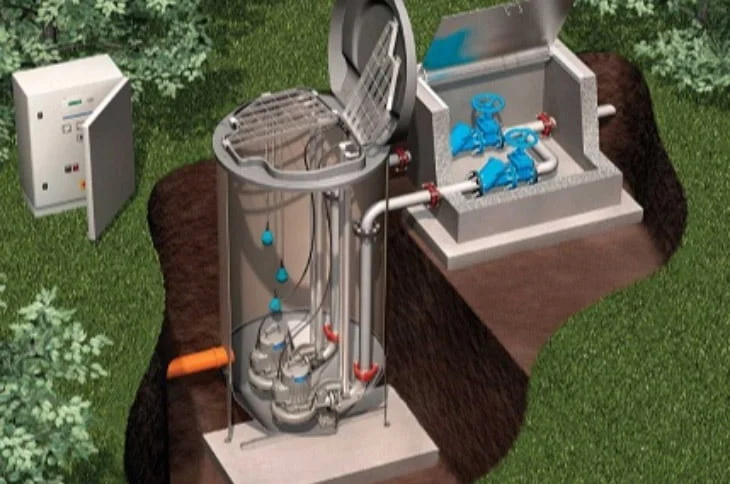
Wastewater Pumping Stations are commonly used in municipal sewage systems and industrial wastewater treatment plants where gravity is not sufficient to move the wastewater.
Municipalities use wastewater pumping stations to transport sewage from lower-lying areas to higher elevations where it can be treated before being discharged into a waterway or reused. Wastewater pumping stations are also used to transport sewage over long distances or to overcome physical barriers such as hills, mountains, or other natural obstacles.
Industrial facilities such as factories, refineries, and chemical plants that produce large amounts of wastewater may also need a Wastewater Pumping Station. These facilities often have their own on-site wastewater treatment plants and use Wastewater Pumping Stations to transport the wastewater from the facility to the treatment plant.
In some cases, smaller-scale Wastewater Pumping Stations may also be used by individual homeowners or small communities who live in areas with high water tables or low-lying areas. These pumping stations can be used to transport wastewater from septic tanks or sewage holding tanks to municipal sewer systems or to a nearby treatment facility.
Overall, wastewater pumping stations are essential for moving wastewater efficiently and safely from one location to another, and they are an important part of modern wastewater management systems.